The Avenger was really “millionaire scientist” Roger Wright, who apparently had nothing better to do than run around in a bright red skintight costume with hood and mask, fighting commies. That’s the premise of both of these stories, taken from The Avenger #1 (1955), published by ME Comics in the wake of the Comics Code. ME (Magazine Enterprises) had been publishing Ghost Rider, drawn by Dick Ayers, but GR didn’t fit into the new Code-world, so they tried a couple of superhero comics. The Avenger (four issues) was one, and Strongman (also four issues) the other. The Avenger #1 was drawn by former Ghost Rider artist Dick Ayers for issue #1, and Bob Powell for subsequent issues. In an unusual twist, the origin story of The Avenger is held until the last story of the issue, after we've already seen what the guy can do in action. Another unusual twist is that The Avenger is inspired partially by a Ghost Rider mask (!!) Roger bought for his nephew. Those masks were sold in ads from ME. So it’s an early example of product placement.
The Grand Comics Database gives veteran comic book scripter Paul S. Newman credit for the writing.
[SPOILER ALERT] Comics Code influence shows significantly in the origin story, where Roger’s brother and sister-in-law have been killed by the commies in East Berlin. Yet even though Roger has the guy responsible for the deaths, he leaves without doing any avenging. Before the Code I believe he would have taken him up in his autogyro and dropped him out, or some such vengeful act, but after the Code, nuh-uh, nope. If anything happened to the bad guy, it isn’t shown, and we have to use our imagination. [END OF SPOILER]
Chủ Nhật, 12 tháng 5, 2013
Thứ Bảy, 11 tháng 5, 2013
The Children's Vampire Hunting Brigade (KICKSTARTER)
David Blake Lucarelli writes in to let us know there is currently a KICKSTARTER under way for The Children's Vampire Hunting Brigade, a new 4-issue mini series comic inspired by the true life events of The Gorbal's Vampire legend from Scotland. This may ring some bells with long time THOIA followers as this half century old+ urban legend from Glasgow is hauntingly tied to a precode horror tale we've featured here twice already (and now a third time for you newbies!) If you're unfamiliar with the legend, click this link HERE for full backstory from the BBC, then click HERE for more info about the new Kickstarter comic project and how to help. And below (again) is an encore presentation of Hy Fleischman's bloodsuckin classic-- The Vampire with the Iron Teeth, from the December 1953 issue of Dark Mysteries #15. Best of luck to David and company with this project!
Thứ Sáu, 10 tháng 5, 2013
The JLA Villains
With the Justice League of America, Julius Schwartz and Gardner Fox had something of a problem. During the JSA's run in All-Star during the Golden Age, comics were larger and thus could accommodate what were essentially separate adventures for the various heroes with a plotline that somewhat loosely tied them together. With the smaller comics of the Silver Age (essentially 25-page stories) and five heroes and the need for intros and outros, it didn't make much sense to have individual storylines. As a result the general setup was for 1-2 heroes in separate chapters. However, this created another problem; given that no DC villains had ever defeated even one hero in a story, how could Schwartz and Fox create drama with a villain facing two heroes?
In Brave & Bold #28 (the first JLA story), the answer was to have an alien villain, Starro the Conqueror. Starro looked like a giant starfish, and so he deputized three Earth starfish. They battled Green Lantern, the Martian Manhunter and Wonder Woman, and the Flash, respectively. In the finale, all the members ganged up to defeat Starro.
In B&B #29, the JLA faced the Weapons Master, a villain from the future who was trying to figure out which of four amazing weapons he had would defeat the police of his era. So he came back in time and battled the JLA. First he took on the Flash, then Martian Manhunter and Aquaman, then Wonder Woman and Green Lantern. In the final chapter, all the JLA members (including Batman and Superman) defeated the Weapons Master.
In the final tryout in B&B #30, the villain was Amazo, the android who could absorb the powers of the JLA. In the first segment, he defeated Wonder Woman. The second chapter had him beating Green Lantern and Aquaman, while in part three he managed to top Flash and the Martian Manhunter. In the finale, Green Lantern manages to defeat him.
Rather than continue on discussing the individual segments, I'll just talk about the villains and why they were able to handle the JLA:
In JLA #1, Despero (an alien) puts all the JLA members except the Flash into a trance. Then he plays a bizarre game of chess, which results in each of the members being transported to face a menace on an alien world. Thus he really doesn't have to battle the JLA as a team or even individually.
In JLA #2, there are three villains, all of whom use magic to battle the superheroes.
JLA #3 features the first appearance of Kanjar Ro (an alien), who immobilizes everybody on Earth and blackmails the JLA into helping him in his battles with the rulers of three other planets.
In JLA #4, the team faces an alien with amazing weapons.
Doctor Destiny uses robots that are constructed to look like foes of the JLA members and stays in the background until he can use a will-deadening ray on them in JLA #5.
In JLA #6, Professor Amos Fortune invents the Stimoluck, a machine that can cause people to have a run of bad luck.
In JLA #7, aliens use an energy-sapping device.
A small-time crook discovers a flashlight which can force others to obey his commands in JLA #8.
In JLA #9 aliens with weird powers battle the Justice League.
Felix Faust uses magic against the JLA in #10.
Overall, in the thirteen issues, there are six battles against aliens. But even more common than the aliens are the bizarre weapons, which appear in almost every issue when you think about it. B&B #29 and #30 (Amazo the android is a weapon), JLA #4, 5, 6, 7. You can talk about the aliens, but they are mainly there because they bring credibility to the oddball weapons.
This post was suggested in an email by longtime commenter Warren.
In Brave & Bold #28 (the first JLA story), the answer was to have an alien villain, Starro the Conqueror. Starro looked like a giant starfish, and so he deputized three Earth starfish. They battled Green Lantern, the Martian Manhunter and Wonder Woman, and the Flash, respectively. In the finale, all the members ganged up to defeat Starro.
In B&B #29, the JLA faced the Weapons Master, a villain from the future who was trying to figure out which of four amazing weapons he had would defeat the police of his era. So he came back in time and battled the JLA. First he took on the Flash, then Martian Manhunter and Aquaman, then Wonder Woman and Green Lantern. In the final chapter, all the JLA members (including Batman and Superman) defeated the Weapons Master.
In the final tryout in B&B #30, the villain was Amazo, the android who could absorb the powers of the JLA. In the first segment, he defeated Wonder Woman. The second chapter had him beating Green Lantern and Aquaman, while in part three he managed to top Flash and the Martian Manhunter. In the finale, Green Lantern manages to defeat him.
Rather than continue on discussing the individual segments, I'll just talk about the villains and why they were able to handle the JLA:
In JLA #1, Despero (an alien) puts all the JLA members except the Flash into a trance. Then he plays a bizarre game of chess, which results in each of the members being transported to face a menace on an alien world. Thus he really doesn't have to battle the JLA as a team or even individually.
In JLA #2, there are three villains, all of whom use magic to battle the superheroes.
JLA #3 features the first appearance of Kanjar Ro (an alien), who immobilizes everybody on Earth and blackmails the JLA into helping him in his battles with the rulers of three other planets.
In JLA #4, the team faces an alien with amazing weapons.
Doctor Destiny uses robots that are constructed to look like foes of the JLA members and stays in the background until he can use a will-deadening ray on them in JLA #5.
In JLA #6, Professor Amos Fortune invents the Stimoluck, a machine that can cause people to have a run of bad luck.
In JLA #7, aliens use an energy-sapping device.
A small-time crook discovers a flashlight which can force others to obey his commands in JLA #8.
In JLA #9 aliens with weird powers battle the Justice League.
Felix Faust uses magic against the JLA in #10.
Overall, in the thirteen issues, there are six battles against aliens. But even more common than the aliens are the bizarre weapons, which appear in almost every issue when you think about it. B&B #29 and #30 (Amazo the android is a weapon), JLA #4, 5, 6, 7. You can talk about the aliens, but they are mainly there because they bring credibility to the oddball weapons.
This post was suggested in an email by longtime commenter Warren.
Number 1364: Funky Funnies: Herbie and Ticklepuss!
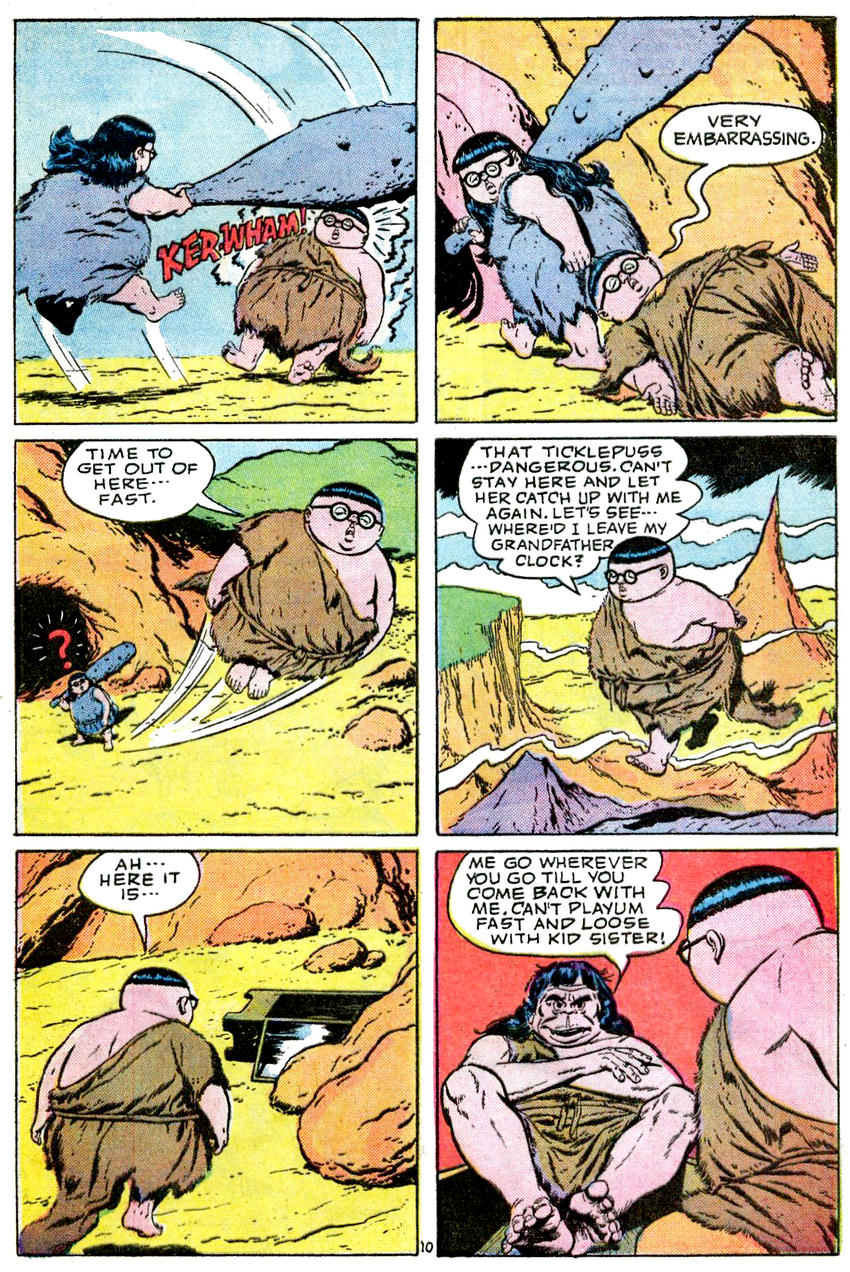
We have reached the last of our Funky Funnies theme week, with entries from Basil Wolverton, Bill Holman, Gill Fox and now from the team of Richard E. Hughes and Ogden Whitney, who created one of the greatest 1960s comic characters, Herbie Popnecker. Herbie has a perfect camouflage for his extraordinary powers: a corpulent body, a blank look through his goggle-eyed lenses, an obsessive-compulsive need for lollipops. No one should mistake his appearance for who he really is. Herbie is much more than what meets the eye. Among things like the power of levitation and ability to talk to animals, Herbie knows famous people. In this story he encounters Ava Gardner and Gregory Peck. He even demonstrates to Gregory how to properly kiss a woman. It's just all in a day's doings for our “fat little nothing,” (as his cruel and verbally abusive father, Pincus Popnecker, calls him). Herbie is very attractive to the opposite sex, as we see here and as we have seen in the past when he's had dalliances with none other than Elizabeth Taylor and Jackie Kennedy. In “A Caveman Named Herbie” he not only makes a starlet swoon, but he catches the eye of a prehistoric dreamgirl, Ticklepuss. Oh, that I should have Herbie’s charms! No woman would be safe!
It's all from Herbie #6 (1964):
A couple more Herbie stories. Just click the pictures:


It's all from Herbie #6 (1964):
**********
A couple more Herbie stories. Just click the pictures:


Thứ Tư, 8 tháng 5, 2013
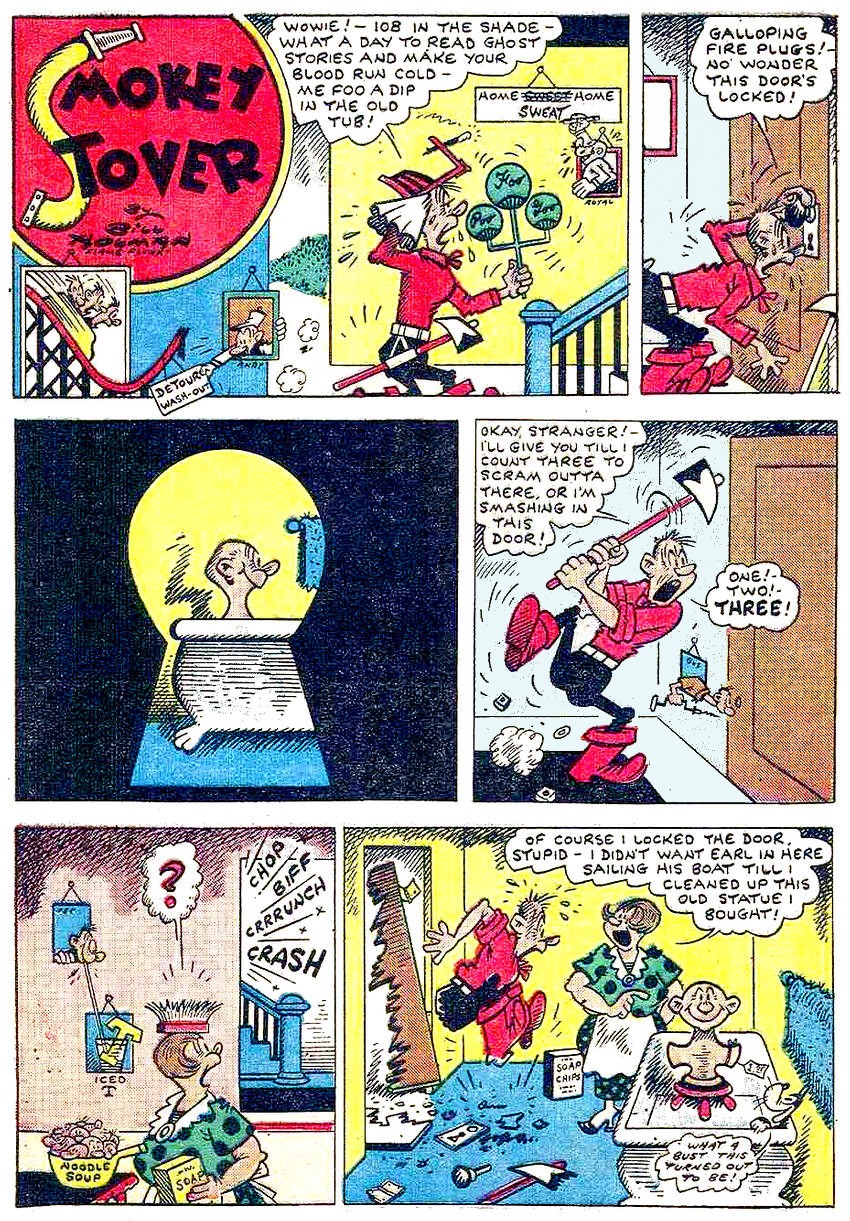
Number 1363: Funky funnies: Bill Holman’s Smokey Stover!
This is the third in our Funky Funnies week, featuring one of the most famous screwball comic characters of all time.
Smokey Stover was a long-running comic strip, around long enough to create a sort of cult readership who understood terms like “1506 nix nix” or “Notary Sojac.” Unfortunately, they came later in the strip, and aren't in any of the pun-filled silliness of the panels in these 1941 and 1942 Sunday strip reprints, found in Dell Four Color #64 (1945). We do have “foo,” which according to popular lore, led to the term “foo fighters,”coined by U.S. airmen during World War II when encountering UFOs in the sky during night raids. In turn that led to the name of a popular rock band, much removed in time and culture from those events of decades ago, including the Smokey Stover strips that were the ultimate inspiration. (That is, if you ignore the speculation that “foo” from Smokey Stover came from the French word “feu,” meaning fire.)
Whatever! It doesn’t matter except to an addled comic book blogger who likes things, including screwball comic strips, kept in context. But what is really important is that Bill Holman was a funny guy who kept the funny stuff coming, panel after panel, page after page, year after year.
More Smokey here. Just click on the pics.
Smokey Stover was a long-running comic strip, around long enough to create a sort of cult readership who understood terms like “1506 nix nix” or “Notary Sojac.” Unfortunately, they came later in the strip, and aren't in any of the pun-filled silliness of the panels in these 1941 and 1942 Sunday strip reprints, found in Dell Four Color #64 (1945). We do have “foo,” which according to popular lore, led to the term “foo fighters,”coined by U.S. airmen during World War II when encountering UFOs in the sky during night raids. In turn that led to the name of a popular rock band, much removed in time and culture from those events of decades ago, including the Smokey Stover strips that were the ultimate inspiration. (That is, if you ignore the speculation that “foo” from Smokey Stover came from the French word “feu,” meaning fire.)
Whatever! It doesn’t matter except to an addled comic book blogger who likes things, including screwball comic strips, kept in context. But what is really important is that Bill Holman was a funny guy who kept the funny stuff coming, panel after panel, page after page, year after year.
More Smokey here. Just click on the pics.
Thứ Ba, 7 tháng 5, 2013
Birth of a Corpse
THOIA returns after a brief mini vacation to the super fun, spook house loaded Wisconsin Dells, with a WTF weirdie from the August 1952 issue of Strange Terrors #2. GCD thinks the art here might be by Bob Forgione... I'm looking forward to the comments on this one. I also want to thank everyone again for the all the kind birthday wishes on my last post-- THANK YOU!
Đăng ký:
Bài đăng (Atom)


.jpg)