Hiển thị các bài đăng có nhãn crime comics. Hiển thị tất cả bài đăng

Thứ Sáu, 16 tháng 11, 2007


Number 219


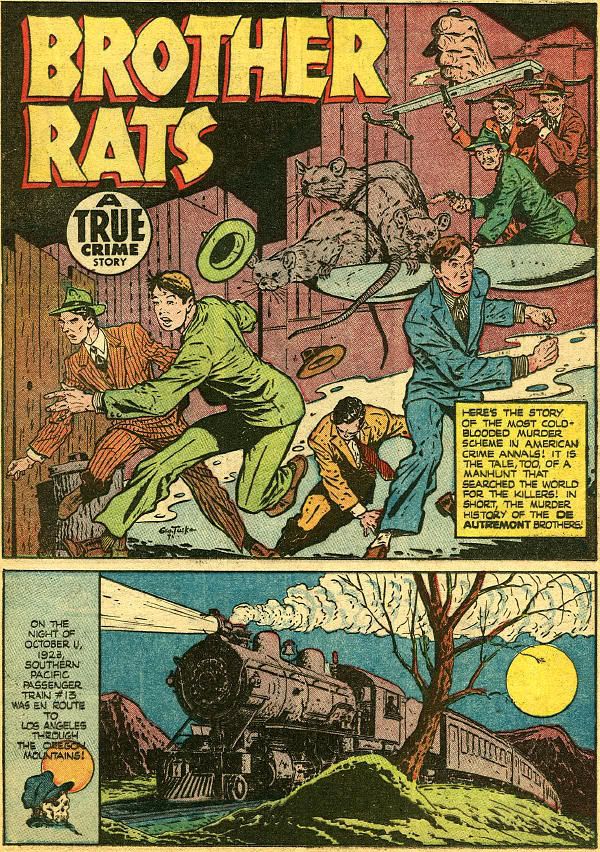
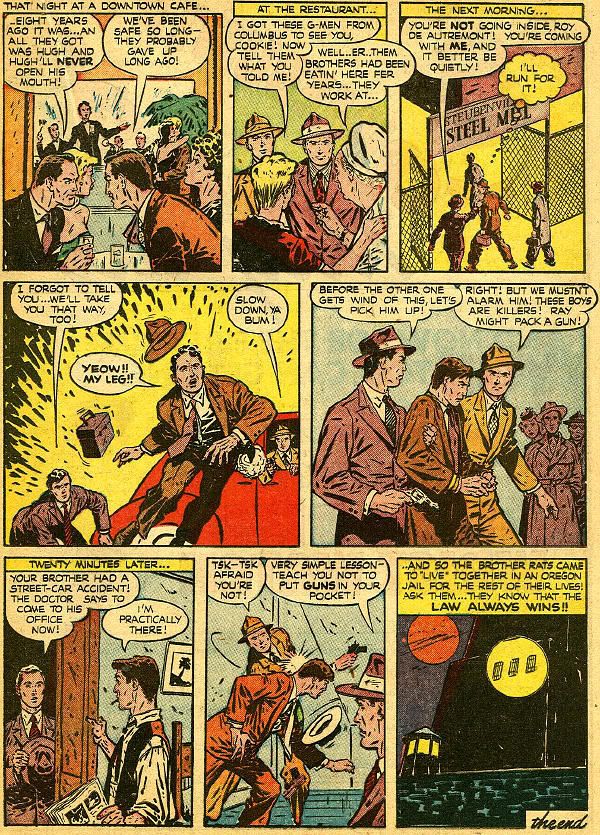
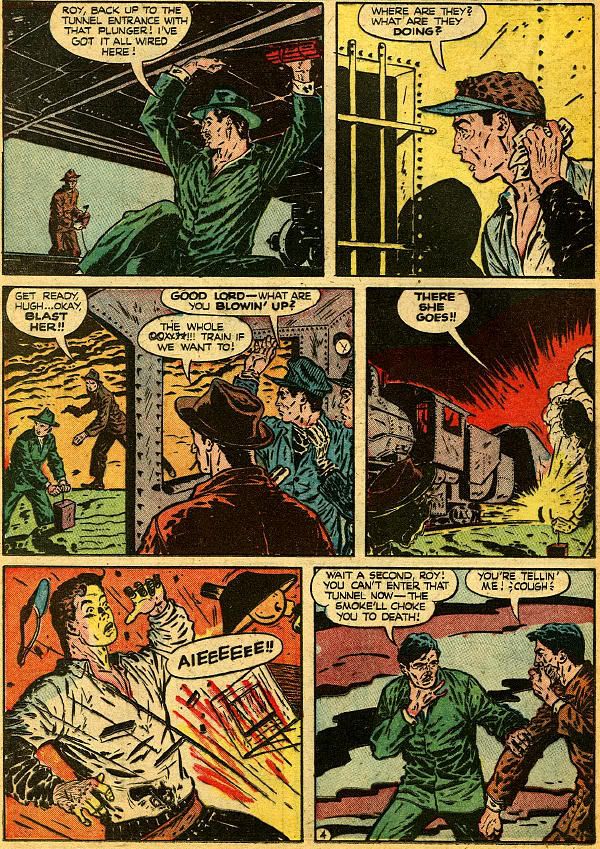
Brother Rats


I haven't shown you a crime comics story in a while. I ain't forgot you muggs what likes these yarns about murderers and killers. Here's a good one about some bad brothers.

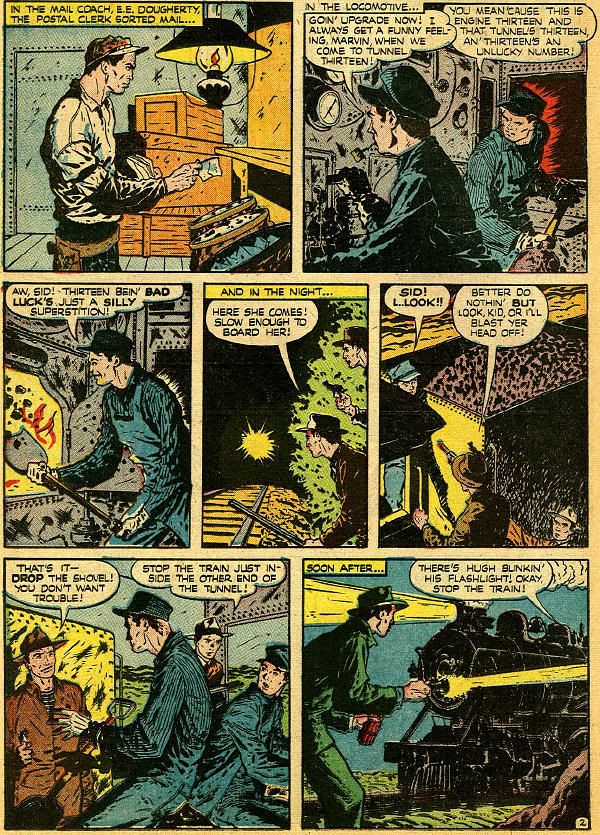
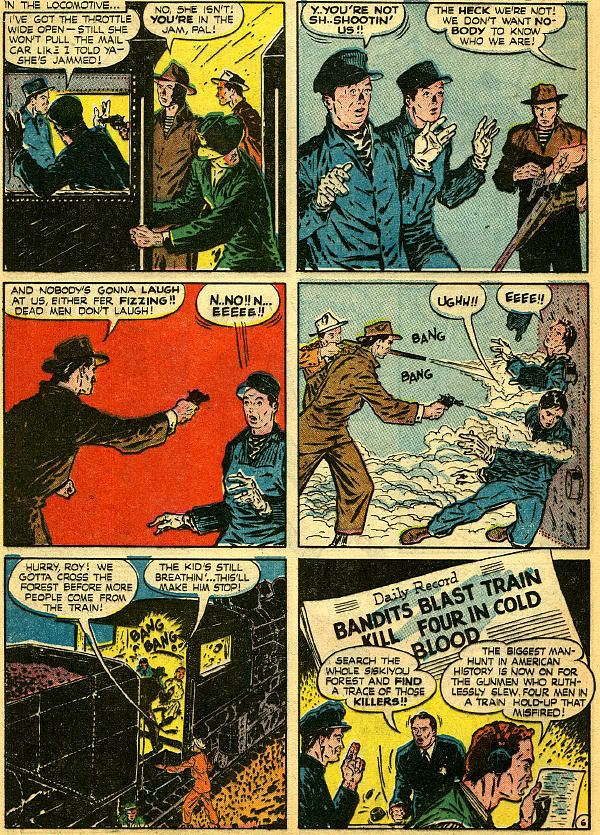
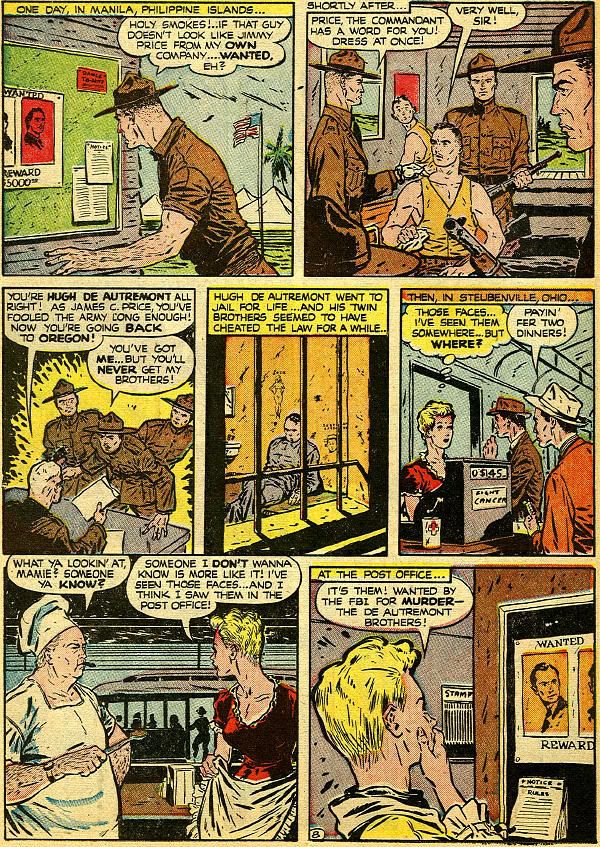
The last of the wild Western train robberies, committed in 1923, is told in "Brother Rats," from Crime Does Not Pay #49, January 1947. The great artwork is by George Tuska. Tuska worked in comic books practically from the beginning of the industry until the 1990s. To me, his finest work was during this postwar period. I love the symbolic splash panel for this story.

As for the DeAutremont brothers--and despite how it's spelled in the story, their name is spelled without a space between De and Autremont-- it took years, but justice was eventually served.

Page 1 / Page 2 / Page 3 / Page 4 / Page 5 / Page 6 / Page 7 / Page 8 / Page 9

Thứ Tư, 15 tháng 8, 2007


Number 176


Airboy Gets Ghastly!


When most Golden Age comics fans think of Graham Ingels they think of him as "Ghastly," a nickname earned during his time drawing some of the creepiest horror comics ever published for EC Comics. He well deserved that nickname. But Ingels was an artist who freelanced on various other genres of comics before he signed on at EC. This particular Airboy story, from Airboy Volume 5 Number 7, August 1948, although unsigned, is undoubtedly one of his.

Ingels, who was born in 1915, was about a decade older than his fellow EC artists. Ingels was a mature and polished cartoonist by the time he started his comics career. So it is with this Airboy story, a far-fetched story about criminals killing "bums," (now called "homeless persons"), secreting dope on their bodies and shipping them to their home cities where the dope can be claimed. The crime comics element is foremost in the story, and along with the later horror stories, was a milieu well suited to Ingels' style.

Airboy's dad shows up in this story. He isn't given a name, so is he Airdad?

The comic I scanned this from is from a copy reported unsold after it went off sale. The title strip had been razored off the cover, returned for credit to the distributor. The mutilated comic was then sold by an unscrupulous storeowner or news dealer, probably for 5¢. I used to see those sorts of displays in various stores in the early to mid-1950s. I think after a time they were shut down by local magazine distributors. My copy has tape holding the razored pages together through the first few pages of the story. I didn't do the taping, and I found this issue along with a couple of others in like condition. Fortunately, the tape's adhesive hasn't dried out, so the cellophane is still intact, not fallen off leaving a stained brown residue.

The cover, which I got off the Internet, is also by Ingels, and has a really nice graphic design. The coloring, and the silhouettes of the figures against the sunset make it stand out. It's likely influenced by Will Eisner, who had some very memorable Spirit splash panels set on piers like this.


Thứ Tư, 8 tháng 8, 2007


Number 172


From Those Wonderful Folks Who Brought You Organized Crime


Bob Fujitani, who signed his work "Bob Fuje," was one of the best illustrators in comics for many years. He started in the WWII era drawing characters like The Hangman, but after the war went to Charles Biro, illustrating some very memorable stories for Crime Does Not Pay and Crime and Punishment. Later in his career he illustrated Doctor Solar for Gold Key, but he was also helping with comic strips, doing other illustrative work. He was a busy, in-demand artist. I'll show more stories by Fujitani in the future.

"Dion 'Gimpy' O'Banion" is the "true life" story of a Chicago gangster. The story has some truth to it, but as with all of these types of stories, names are changed, incidents are exaggerated. Some of the facts in the story are true: O'Banion did have a limp; he was a florist; he did get killed by rival gangsters. A good overview of his crime career is told here.

O'Banion made his money in bootlegging, thanks to Prohibition. Comic books also came out of Prohibition. There's an alternate history of comic books that needs more exploration, but a good start is the book Men Of Tomorrow by Gerard Jones, which helps explain some of the murky ties some comic publishers had with the Mafia. It's a pretty interesting story, and that book is highly recommended. A mob connection isn't so surprising, really, since New York City was the home of comics publishing, also the home of the Five Families, extremely powerful in that era. There wasn't much they didn't have their fingers in if it made money, and there was money to be made in comic books, especially in distribution, printing and other business aspects.

In the meantime, the guys who made the least money were the ones who made the comic books great. So it was with Bob Fujitani. I doubt that Lucky Luciano could ever produce a comic book, but he could make sure he got his cut of the profits. Bob Fujitani's artwork would be a reason for someone to plunk down his dime for a comic. Fujitani got a page rate and no cut of the profits.

This particular story came from Crime and Punishment #5 (1948).